Radial Shock Wave Therapy – THe Central Coast
Radial shock wave therapy for tendon pain and muscle injuries.
The only clinic on The Central Coast offering both Radial and Focused Shockwave Therapy
If you have been dealing with tendon pain for months, tried rest, tried physio, tried cortisone, and are still not right, radial shockwave therapy may be the treatment you have not yet had.
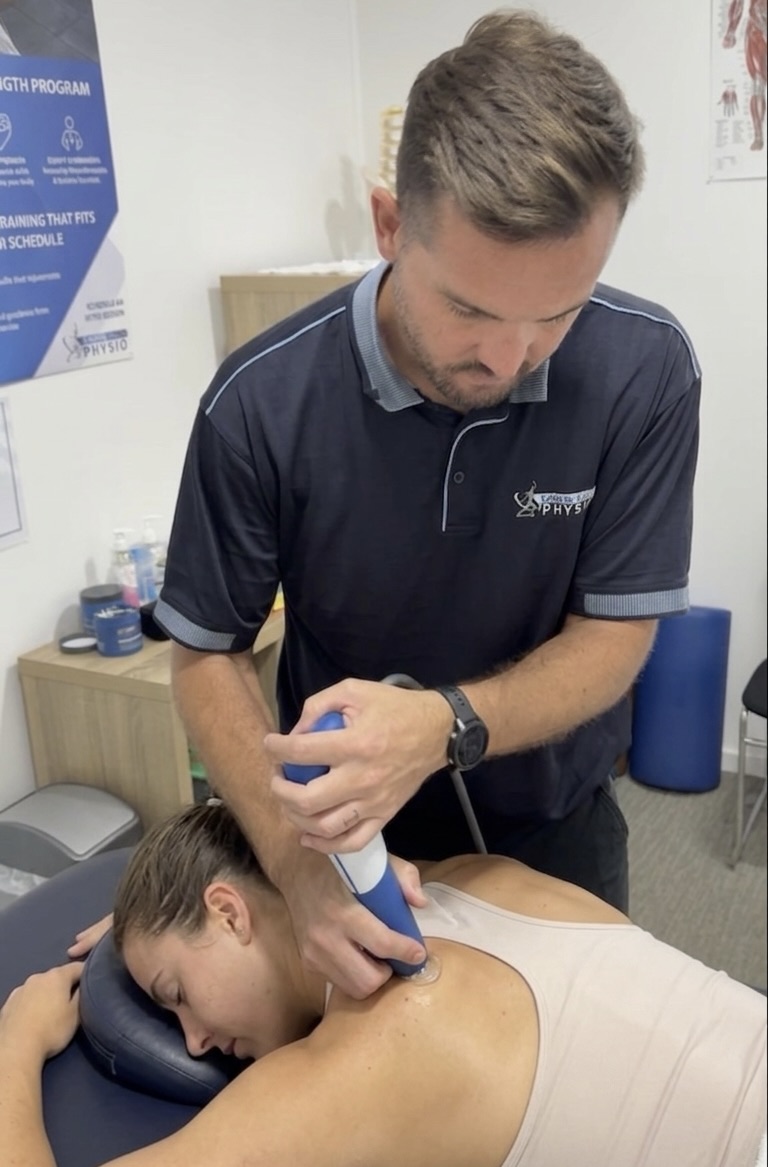
Radial shockwave is not a passive treatment. It delivers high-energy acoustic pulses directly into the affected tissue, triggering the body’s own repair processes at a cellular level. It reduces neurogenic inflammation, stimulates collagen remodelling, and restores the tissue quality that rest alone cannot.
It is one of the most thoroughly researched treatment modalities in musculoskeletal medicine. A systematic review examining over 100 randomised controlled trials confirmed that extracorporeal shockwave therapy is both effective and safe for a range of orthopaedic conditions (Schmitz et al., 2015).
Who It Is For
Radial shockwave therapy is most effective for chronic tendon injuries that have not responded to standard care. If your pain has been present for more than six weeks and is not improving, it is worth assessing whether shockwave is appropriate.
Conditions commonly treated with radial shockwave at Canton Beach Physio include plantar fasciitis, mid-portion Achilles tendinopathy, patellar tendinopathy, medial tibial stress syndrome, lateral and medial elbow tendinopathy, rotator cuff tendinopathy, Osgood Schlatter’s Disease and acute muscle injuries in active and sporting patients.
Greater trochanteric pain syndrome and gluteal tendinopathy are among the most common conditions we treat with shockwave. This condition frequently presents as pain on the outside of the hip when walking, lying on your side, or climbing stairs, and is often misdiagnosed as hip bursitis for months or years before the underlying tendon pathology is identified and treated correctly.
Proximal hamstring tendinopathy is another condition that responds well to radial shockwave. It typically presents as deep buttock pain with prolonged sitting, running, or loading through the hip, and is commonly underdiagnosed or confused with referred pain from the lower back or sciatic nerve.
For runners and athletes with tendon pain, muscle injuries or other sports related problems, see our Sports Physiotherapy in Toukley service for assessment, rehabilitation and return to sport planning.

Relief of Muscle Aches and Pains
Alleviating discomfort in muscles due to strain or overuse.

Increase of Local Blood Circulation
Enhancing blood flow to targeted areas to promote healing.

Activation of Connective Tissue
Stimulating the repair and regeneration of connective tissues.
What the Research Shows
Radial shockwave therapy has a strong evidence base for the conditions we treat most.
For plantar fasciitis, a large randomised controlled trial using the EMS DolorClast device confirmed radial shockwave is safe and effective for chronic recalcitrant cases. This study formed the basis for FDA approval of the DolorClast device in the United States (Gerdesmeyer et al., 2008).
For mid-portion Achilles tendinopathy, a randomised controlled trial found that radial shockwave combined with an eccentric loading program produced superior outcomes to eccentric loading alone (Rompe et al., 2009).
For acute muscle injuries in sport, a study of elite professional footballers using a protocol that included radial shockwave found return-to-play times reduced by up to 58% compared to published benchmarks for standard care (Morgan et al., 2021).
The Device We Use
We use the EMS DolorClast Radial Shockwave system, the same device used in the clinical trials referenced above and in leading sports medicine centres across Europe. High and consistent energy delivery across all treatment frequencies is what separates the DolorClast from lower-grade devices. The energy reaching the tissue is what drives the biological response.
Why We Offer Both Radial and Focused Shockwave
Radial shockwave energy disperses outward from the applicator, making it ideal for superficial and mid-depth structures such as plantar fascia, mid-portion Achilles, muscle trigger points, and most tendon pathologies.
For deep structures such as insertional tendons, calcific deposits, or injuries that have not responded to radial shockwave, focused shockwave delivers concentrated energy to a precise point at depth.
Having both systems means your physiotherapist selects the right modality for your specific injury, depth, and stage of healing rather than applying a one-size approach. No other clinic on The Central Coast offers this.
What to Expect
A shockwave assessment is included in your first appointment. Your physiotherapist will confirm the diagnosis, determine whether radial or focused shockwave is indicated, and explain what a course of treatment involves before you commit to anything.
A typical course is four to six sessions spaced one week apart, combined with a targeted loading and strengthening program. Most patients notice a change within the first two to three sessions.
Sessions are 30 minutes. The shockwave component takes 10 to 15 minutes. You will feel firm pressure during treatment. Mild soreness for 24 to 48 hours afterwards is normal and expected as it is part of the healing response.
References
Gerdesmeyer L, Frey C, Vester J, et al. Radial extracorporeal shock wave therapy is safe and effective in the treatment of chronic recalcitrant plantar fasciitis: results of a confirmatory randomized placebo-controlled multicenter study. American Journal of Sports Medicine. 2008;36(11):2100–2109.
Morgan J, Hamm M, Schmitz C, Brem M. Return to play after treating acute muscle injuries in elite football players with radial extracorporeal shock wave therapy. Journal of Orthopaedic Surgery and Research. 2021;16(1):708.
Rompe JD, Furia JP, Maffulli N. Eccentric loading versus eccentric loading plus shock-wave treatment for midportion Achilles tendinopathy: a randomized controlled trial. American Journal of Sports Medicine. 2009;37(3):463–470.
Schmitz C, Császár NBM, Milz S, et al. Efficacy and safety of extracorporeal shock wave therapy for orthopedic conditions: a systematic review on studies listed in the PEDro database. British Medical Bulletin. 2015;116:115–138.
Ready to move better and feel stronger?
Book an appointment at Canton Beach Physio in Toukley for physiotherapy, sports injury care, strength rehabilitation or shockwave therapy.